
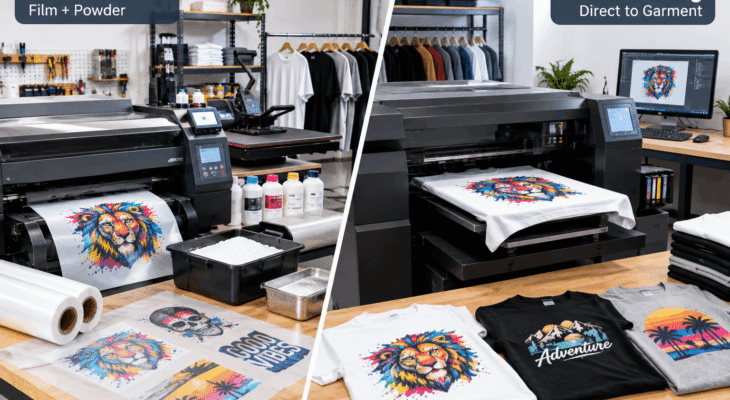
DTF vs DTG for T-shirts is a common comparison for anyone researching digital apparel printing. Both methods can produce detailed, full-color garment designs, but they use different processes and suit different production needs. Understanding how each method works makes it easier to evaluate fabrics, workflow, equipment, and day-to-day operation.
What Is DTF Printing?
DTF stands for Direct-to-Film. Instead of printing the design directly onto the garment, the artwork is printed onto a specialized transfer film.
A typical DTF workflow involves several stages:
- The artwork is prepared in suitable printing software.
- The design is printed onto PET transfer film using textile inks.
- White ink is generally applied as part of the print layer when required.
- Hot-melt adhesive powder is applied to the printed film.
- The powder is cured using appropriate equipment.
- The finished transfer is positioned on the garment.
- A heat press applies controlled heat and pressure to transfer the design.
This makes DTF a transfer-based garment decoration method. The design can be prepared separately from the final garment application, which can be useful when a business wants to produce transfers before completing individual shirt orders.
What Is DTG Printing?
DTG means Direct-to-Garment. With DTG, the printer applies textile ink directly onto the surface of the garment rather than creating a separate transfer first.
The general process is more direct. The garment is prepared, positioned in the printer, and the artwork is printed onto the fabric. Depending on the garment and printing system, pretreatment may be required, particularly when working with dark garments.
DTG is closely associated with detailed direct printing on apparel and is often considered for businesses producing custom garments with complex artwork, especially when the fabric and production workflow are compatible with the technology.
DTF vs DTG for T-Shirts: The Main Differences
The biggest difference is simple: DTF prints the design onto film before transferring it to the shirt, while DTG prints directly onto the garment.
That difference affects several parts of the production process.
1. Printing Workflow
DTF adds transfer-film preparation, adhesive powder, curing, and heat pressing to the workflow. This creates more individual steps, but it also separates design printing from garment application.
DTG has a more direct path from artwork to garment. However, garment preparation and printer setup remain important parts of the process.
For a business, the relevant question is not simply which process has fewer steps. The better question is which workflow fits the products, order types, workspace, and production routine.
2. Fabric Compatibility
Fabric selection is an important part of the DTF vs DTG decision.
DTF transfers can be used across a broad range of garment materials when the transfer and application process are appropriate. This can make the method useful for businesses working with cotton, polyester, blends, sportswear, promotional clothing, and different garment colors.
DTG is more closely associated with suitable textile surfaces, with cotton commonly being an important consideration. Dark garments may also require additional preparation before printing.
Because garment construction, fabric composition, coating, and printer specifications can vary, compatibility should always be checked against the equipment manufacturer’s requirements rather than assumed from the fabric name alone.
3. Dark and Light Garments
Both technologies can be used for designs that need strong color visibility on darker garments, but they approach the problem differently.
DTF can use a white ink layer in the transfer, helping colored artwork appear against dark fabrics. The completed transfer is then applied to the shirt with a heat press.
DTG systems can also print on dark garments, but the preparation and ink application process can differ from printing on light garments. Pretreatment, white ink handling, curing, and printer settings can therefore become important considerations.
4. Print Feel and Appearance
The physical feel of a finished print depends on the printing technology, artwork, ink coverage, garment, curing or pressing conditions, and other production variables.
DTG ink is deposited directly into or onto the textile surface, creating a different result from a DTF transfer layer that is applied to the garment.
Neither method should be evaluated only from photographs. If print feel is an important selling point, businesses should examine physical samples produced with the fabrics and artwork they expect to use.
Which Method Fits Different T-Shirt Businesses?
There is no single choice that suits every apparel business. The right technology depends on what the business actually sells and how it handles orders.
A custom apparel seller producing varied garments may value the flexibility of a transfer-based workflow. A business concentrating on suitable fabrics and direct garment decoration may instead prefer a DTG workflow.
Order structure also matters. Print-on-demand businesses, personalized apparel sellers, promotional clothing suppliers, and established print shops can have very different requirements.
Before purchasing equipment, consider:
- The fabrics you expect to print
- Light versus dark garment requirements
- Typical artwork complexity
- Expected order volume
- Available workspace
- Heat press requirements
- Consumables and storage
- Maintenance procedures
- Operator experience
- Production time for each order
These factors provide a more useful basis for comparison than choosing a method simply because it is popular.
What Equipment Does Each Method Need?
A DTF setup commonly involves a DTF printer, transfer film, compatible inks, adhesive powder, a curing solution or device, and a heat press. Software for preparing and managing print jobs can also be part of the workflow.
A DTG setup centers on the garment printer itself, along with the supplies required for garment preparation, printing, curing, and maintenance. Depending on the system, pretreatment equipment or supplies may also be necessary.
For buyers comparing equipment, a collection such as DTF T-shirt printer from Procolored can provide a starting point for examining T-shirt-focused DTF and DTG equipment.
The important point is to evaluate the complete production system rather than looking at the printer alone. A printer may have suitable technical capabilities, but the overall setup must also fit the operator’s workflow and available space.
How Should You Compare DTF and DTG?
A practical comparison can begin with four questions.
What garments will you print?
If your product range includes multiple fabric types and garment colors, investigate which technology and consumables are designed for those materials.
How will orders be produced?
Consider whether you want a direct-print workflow or a process that creates transfers before final garment application.
What supporting equipment is required?
Look beyond the printer. DTF production, for example, involves film, adhesive powder, curing, and heat pressing. DTG production can involve garment pretreatment and other preparation requirements.
What will maintenance look like?
Digital textile printers require appropriate maintenance. Ink handling, printhead care, cleaning routines, software settings, and consumable management can all affect the consistency of production.
Understanding these responsibilities before buying equipment can help prevent unexpected operational difficulties.
Is DTF or DTG Better for T-Shirt Printing?
The more useful question is which technology better matches the intended application.
DTF may make sense when a business values transfer-based production and wants to work across a varied apparel range. DTG may be appropriate when direct garment printing fits the selected fabrics, artwork, and production workflow.
For either method, the quality of the final product depends on more than the printer. Artwork preparation, garment selection, ink, consumables, settings, curing, pressing, and maintenance all contribute to the finished result.
A thoughtful DTF vs DTG comparison therefore starts with the business model and garment requirements, then moves into equipment specifications. By matching the printing method to the actual products and workflow, a T-shirt business can make a more informed equipment decision and build a production process that is practical to operate.