
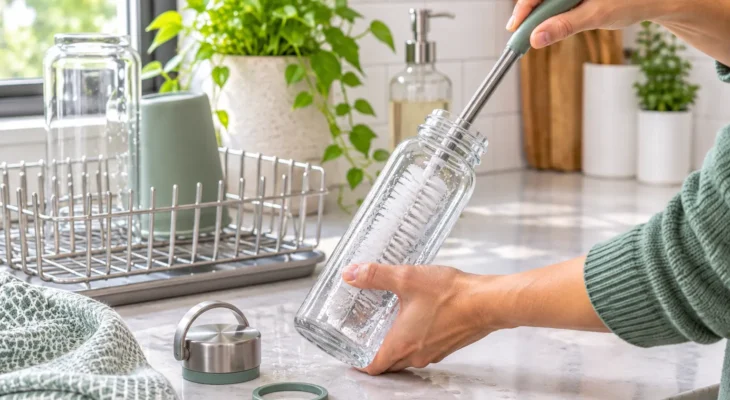
Knowing how to clean a glass water bottle properly helps keep it fresh, clear and ready for everyday use. Although glass is generally straightforward to wash, a bottle’s narrow neck, lid, threads and seals can trap moisture or drink residue if they are overlooked. A consistent cleaning routine should therefore cover every part, not just the inside of the bottle.
Whether you use a reusable bottle for plain water, flavoured water or other drinks, knowing how to clean a glass water bottle helps make daily maintenance easier.The right approach also depends on the lid material and the manufacturer’s care instructions.
Why Knowing How to Clean a Glass Water Bottle Matters
A reusable bottle comes into contact with hands, water, bags and different surfaces throughout the day. When moisture or drink residue remains inside, it can contribute to unpleasant smells, visible deposits or an unappealing taste.
Regular washing helps remove:
- Saliva and other everyday residues around the drinking opening
- Dust and particles that enter when the bottle is open
- Mineral deposits left by water
- Residue from fruit, tea or other drinks
- Moisture and deposits around lid components
Glass itself has a smooth, non-porous surface, which makes it relatively easy to wash. However, the complete bottle assembly may include materials such as silicone, plastic, bamboo or wood. These components need suitable care as well.
How to Clean a Glass Water Bottle Step by Step
Knowing how to clean a glass water bottle correctly also means cleaning the neck, opening and other areas where residue can collect.
For routine cleaning, use warm water, mild dish soap and a bottle brush that can reach the bottom and sides.
1. Empty and Rinse the Bottle
Pour out any remaining liquid as soon as practical. Rinse the bottle with warm water to loosen residue before adding soap.
If the bottle has held juice, tea or another flavoured drink, give it particular attention. Sugary or coloured liquids can leave deposits that become harder to remove when allowed to dry.
2. Wash the Interior With a Bottle Brush
Add a small amount of mild dish soap and warm water. Use a long-handled bottle brush to clean the inside, paying attention to the bottom, shoulder and neck.
Choose a brush that fits comfortably through the opening. A brush that is too large may not reach narrow sections, while one that is too small may require more careful movement to clean the full interior.
Avoid abrasive tools or harsh scrubbing materials that could damage decorative finishes or other bottle components.
3. Clean the Exterior and Opening
Wash the outside with a soft sponge or cloth. Give extra attention to the rim, threads and area around the opening, where hands and the mouth may make frequent contact.
If the bottle has a protective sleeve, remove it if the design allows. Clean the sleeve according to its own care instructions, then check that it is completely dry before putting it back.
4. Rinse Thoroughly
Rinse the bottle several times with clean water until no soap remains. Soap residue can affect the taste of water and leave a film on the glass.
Pay attention to the threaded neck and other areas where detergent may collect.
5. Let the Bottle Dry Completely
Place the bottle upside down on a clean drying rack, ideally with enough space for air to circulate around the opening. Keep the lid separate so that moisture does not remain trapped inside.
Once the bottle is fully dry, store it with the lid off or loosely placed, depending on its design. Avoid sealing a damp bottle away in a cupboard or bag.
How to Clean Glass Bottle Lids and Silicone Seals
Learning how to clean a glass water bottle includes caring for its lid and removable parts to maintain proper hygiene.
The lid often requires as much attention as the glass itself. Its threads, grooves and seals can collect moisture and residue, particularly when the bottle is used frequently.
Screw-Top Lids
Remove the lid and wash both its inside and outside with warm, soapy water. Use a small soft brush to reach grooves and threads.
Rinse carefully to remove soap from narrow spaces. Allow the lid to dry fully before reattaching it.
Silicone Seals
Some reusable bottles have a removable silicone ring that helps create a seal. If the design allows removal, take it out carefully and wash it separately.
Clean the groove beneath the seal as well. This area can hold moisture even when the rest of the lid appears dry. Let both the seal and lid dry completely before putting them back together.
Avoid stretching, cutting or pulling a seal with sharp tools. If it becomes cracked, misshapen or difficult to fit correctly, check the manufacturer’s replacement guidance.
Wooden or Bamboo Lids
Wooden and bamboo lids need more cautious handling than glass or many plastic components. Unless the manufacturer explicitly says otherwise, avoid soaking them or placing them in a dishwasher.
Wipe the surface with a lightly damp cloth and follow the supplied care instructions. Dry the lid promptly and thoroughly before storing it.
Can You Put a Glass Water Bottle in the Dishwasher?
Some glass water bottles are dishwasher-safe, but this should never be assumed based on appearance alone. Check the product’s care label or manufacturer’s instructions before using a dishwasher.
If dishwasher cleaning is permitted:
- Separate the lid and removable components where instructed.
- Place the bottle securely so it cannot strike other items.
- Follow the recommended dishwasher placement and cycle guidance.
- Check whether seals, sleeves and lids have separate washing restrictions.
Even when the glass bottle is dishwasher-safe, its accessories may not be. Handwashing is often the more suitable option when the bottle’s care requirements are unclear.
Removing Stains When Cleaning a Glass Water Bottle
A bottle that develops an unusual smell or visible film may need more than a quick rinse. First, identify what kind of residue you are dealing with.
For lingering drink residue: Wash with warm water, mild dish soap and a bottle brush. Repeat if necessary, then rinse thoroughly.
For mineral deposits: Hard water can leave cloudy marks or a white film. A cleaning solution containing diluted white vinegar may help loosen these deposits if the bottle manufacturer’s instructions permit it. Rinse very thoroughly afterwards.
For persistent odours: Wash the bottle and lid separately, paying particular attention to seals and grooves. Allow all components to dry completely before reassembling.
Do not mix cleaning products, especially vinegar with bleach or other chemical cleaners. If a smell persists despite proper cleaning, inspect the lid and seals for residue or deterioration.
How Often Should You Clean a Reusable Glass Bottle?
Understanding how to clean a glass water bottle regularly helps prevent residue buildup and keeps every component fresh.A regular routine makes it easier to understand how to clean a glass water bottle and keep it ready for daily use.
For a bottle used every day, washing it after each day’s use is a sensible routine. If it contains anything other than plain water, clean it promptly after use rather than leaving the liquid inside for extended periods.
A practical maintenance schedule looks like this:
| Component | Suggested routine |
|---|---|
| Glass bottle interior | Wash after daily use |
| Bottle exterior and rim | Clean during each wash |
| Lid and threads | Wash regularly, ideally after each use |
| Removable silicone seal | Inspect and clean regularly |
| Protective sleeve | Clean according to its material and care label |
| Wooden or bamboo lid | Wipe and dry according to manufacturer guidance |
These are general habits rather than a substitute for product-specific instructions. Frequency may need to increase when the bottle is used for flavoured drinks or shared between people.
Common Glass Water Bottle Cleaning Mistakes
A few avoidable habits can make bottle maintenance less effective.
- Cleaning only the glass: The lid, threads and seals also need attention.
- Leaving liquid inside for long periods: Residue can dry onto surfaces and become harder to remove.
- Reassembling while damp: Trapped moisture can lead to stale smells.
- Using unsuitable brushes: Abrasive tools may damage finishes or accessories.
- Assuming every component is dishwasher-safe: Different materials have different care requirements.
- Ignoring damaged seals: Worn components may no longer fit or close properly.
A little attention to these details helps keep a reusable bottle in good condition.
Choosing Reusable Drinkware That Is Easy to Maintain
Knowing how to clean a glass water bottle before buying one can help you choose a design that is easier to wash, rinse and dry.
Ease of cleaning is worth considering when selecting a reusable bottle. A wide opening can make it easier to reach the interior with a brush, while a simple lid design may have fewer grooves and detachable parts to maintain.
Before choosing a bottle, consider:
- Whether the opening is wide enough for your preferred cleaning brush
- Whether the lid can be taken apart for cleaning
- Whether replacement seals or accessories are available
- Which parts are suitable for dishwasher cleaning
- Whether the bottle comes with a protective sleeve or other removable components
People comparing different options can explore the reusable drinkware collection as part of their search for everyday glassware.
The best choice is one that suits how you drink, carry and clean your bottle. A design that is easy to wash and dry is more likely to fit naturally into a regular routine.
A Simple Routine Keeps Your Bottle Ready for Use
Cleaning a glass water bottle does not require complicated products or an elaborate process. Wash the glass with mild dish soap, use a suitable brush to reach the bottom, clean the lid and seals separately, and allow every component to dry before storage.
Most importantly, treat the bottle as a complete item rather than focusing only on the glass body. With regular cleaning and attention to the manufacturer’s care instructions, reusable glass drinkware can remain a practical part of everyday hydration.